

A brief look at how the skin reacts immediately to sunlight reveals the short-term effects of sun exposure.


Sunlight is vital for life; it aids in regulating our circadian rhythm, enhances mood, and allows the body to synthesize vitamin D. Nonetheless, despite the sun’s benefits, too much exposure can harm the skin. It is essential to comprehend the impact of sun exposure on skin health in order to maintain youthful, healthy, and protected skin throughout one’s life. Ultraviolet (UV) radiation can have numerous effects, including sunburns and tanning, premature aging, and a heightened risk of skin cancer.
This blog examines the effects of sunlight on the skin, the science of UV rays, and effective methods for self-protection.
The sun produces various kinds of ultraviolet rays, each having unique impacts on the skin:
Skin cells’ DNA can be harmed by both UVA and UVB rays, resulting in long-lasting consequences. It is the total exposure accumulated over the years—not merely the infrequent sunbathing—that dictates the extent of sun damage to skin health.
When UVB rays overpower the skin's protective melanin, sunburn occurs. It causes:
Sunburn is an inflammatory response that signifies DNA damage to the skin. A single blistering sunburn can greatly raise the risk of developing melanoma later on.
Although many individuals find tanning appealing, it is actually the skin's way of protecting itself from UV damage. To shield skin cells from additional DNA damage, the body ramps up melanin production.
Bottom line: A tan indicates skin damage, not health.
Spending extended periods of time in hot and humid conditions can lead to clogged sweat glands and the development of prickly, itchy rashes.
When skin is exposed to the sun, it loses moisture and becomes dry, flaky, and irritated. This exposure disrupts the natural skin barrier.
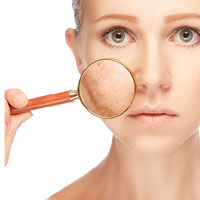
Photoaging is the result of cumulative damage caused by constant exposure to UV radiation. While the changes may not be immediately noticeable, they can develop over years of sun exposure without protection.
Ultraviolet rays degrade collagen and elastin—essential proteins that maintain skin firmness, smoothness, and a youthful appearance. Indicators of photoaging comprise:
UVA rays are primarily responsible for photoaging, contributing to as much as 90% of visible skin changes linked to aging.
Exposure to the sun can cause melanin to be produced in excess, resulting in:
These dark spots commonly show up on the face, neck, hands, and arms—regions that are often exposed to sunlight.
These rough, scaly patches are the result of extended exposure to sunlight. They are deemed precancerous and can progress to squamous cell carcinoma if not treated.
Skin cancer, which may be the most serious long-term consequence, is closely associated with UV exposure.
The main types include:
Basal Cell Carcinoma (BCC): The most frequent type; manifests as shiny nodules or lesions.
Squamous Cell Carcinoma (SCC): Typically manifests as scaly, red patches or nodules.
Melanoma: The most severe type; originates from cells that produce pigment and disseminates quickly.
The risk of skin cancer is significantly heightened by regular unprotected sun exposure, frequent tanning, and sunburns experienced during childhood.
The skin’s immune response can be weakened by UV radiation, making it more difficult for the body to repair DNA damage and combat infections.
Although too much sun can be detrimental, moderate exposure to sunlight has benefits when done safely.
Sunlight aids in the synthesis of vitamin D by the body, which is crucial for:
Usually, it’s enough to expose bare arms and legs to sunlight for just 10–20 minutes a few times a week.
Sunlight increases serotonin levels, helping:
For certain people, controlled exposure to UV light (with medical supervision) can enhance:
Nonetheless, the approach should invariably involve medical phototherapy rather than sunbathing without protection.
Select a sunscreen with broad-spectrum protection against both UVA and UVB rays:
Use a minimum of two fingers’ worth for your face and 1 ounce (equivalent to a shot glass) for your body.
Between 10 a.m. and 4 p.m., UV rays are at their peak.
During these hours, try to remain in the shade.
Serums containing vitamin C, niacinamide, and other antioxidants assist in neutralizing free radicals generated by sun exposure.
Drinking enough water keeps your skin resilient against dryness and environmental stress.
Look for:
Early detection of skin cancer can be lifesaving.
These groups should be extra cautious with daily sun protection.
While the sun is crucial to our existence, it is important to respect its strength. Grasping the effect of sun exposure on skin health aids you in taking preventive measures that will be advantageous for your skin over time. You can safely enjoy outdoor activities without jeopardizing the health and beauty of your skin, as long as you use proper protection. Long-term damage is significantly reduced by consistent habits such as using sunscreen, wearing protective clothing, and engaging in routine dermatological care.
Compassion and excellence converge in advanced dermatological care at Dr. L. H. Hiranandani Hospital. Our expert dermatologists offer world-class diagnosis, prevention, and treatment solutions for sun damage, pigmentation issues, premature aging, and skin cancer concerns. The hospital guarantees thorough management of skin health for people of all ages through cutting-edge technology, individualized care plans, and a patient-centered strategy. Count on Dr L H Hiranandani Hospital to assist you in safeguarding, rejuvenating, and augmenting your skin’s inherent health and glow.
Q. Is daily sunscreen necessary even if I stay indoors?
Yes. UVA rays can penetrate windows, so daily sunscreen is essential for preventing aging and skin damage.
Q. Can darker skin tones get sunburn or skin cancer?
Yes. While melanin offers some protection, darker skin is still vulnerable to sun damage, hyperpigmentation, and skin cancer.
Q. How do I know if a mole is concerning?
Follow the ABCDE rule: Asymmetry, Border irregularity, Color variations, Diameter >6 mm, Evolving shape. If unsure, consult a dermatologist.
Book your appointment online or call our team directly.