Stress is become an inevitable aspect of living in the fast-paced world of today. Stress has more effects on the body than we think, ranging from hormonal changes and insufficient sleep to emotional trauma and work pressure. Hair loss due to stress and anxiety is one of the most prevalent yet sometimes disregarded effects.
Many people have unexpected hair loss without knowing what's causing it, which creates a vicious cycle of worry and panic. The good news is that stress and hair loss are typically reversible, particularly if they are detected early and appropriately treated.
This blog addresses the most prevalent question regarding stress and hair loss: will it grow back? It also examines the connection between stress and hair loss, its symptoms, causes, and available treatments.
The body's immune system, hormone balance, and nutrient absorption are all impacted by stress. The body puts essential processes ahead of hair development when it is under extended physical or emotional stress. After a few months, visible shedding results from this disruption, which forces hair follicles into a resting phase.
Although telogen effluvium is the most prevalent stress-related hair loss problem, autoimmune diseases and genetic hair loss can also be made worse by prolonged stress.
Stress, either physical or emotional, can cause telogen effluvium, a transient hair loss condition. Only 10–15% of hair is normally still in the telogen (resting) phase. Stress, however, pushes up to 30–40% of hair follicles into this stage, which results in severe hair loss.
Intense stress, giving delivery, high fever or illness, significant surgery, drastic dieting or rapid weight loss, hormonal changes (such as thyroid problems), and specific drugs (such as beta-blockers and retinoids).
Hair loss typically starts two to three months after the stressful incident, making it challenging to determine the cause without professional assessment.
Recognizing the symptoms of hair loss due to stress early can prevent long-term damage. Some common signs include:
Telogen Effluvium, a medical term for excessive hair shedding, occurs when many hairs prematurely enter the resting (telogen) phase. This condition is frequently brought on by stress, illness, childbirth, surgery, or nutritional problems. It causes noticeable thinning across the scalp, but it is typically transient, with hair growing back as the body heals.
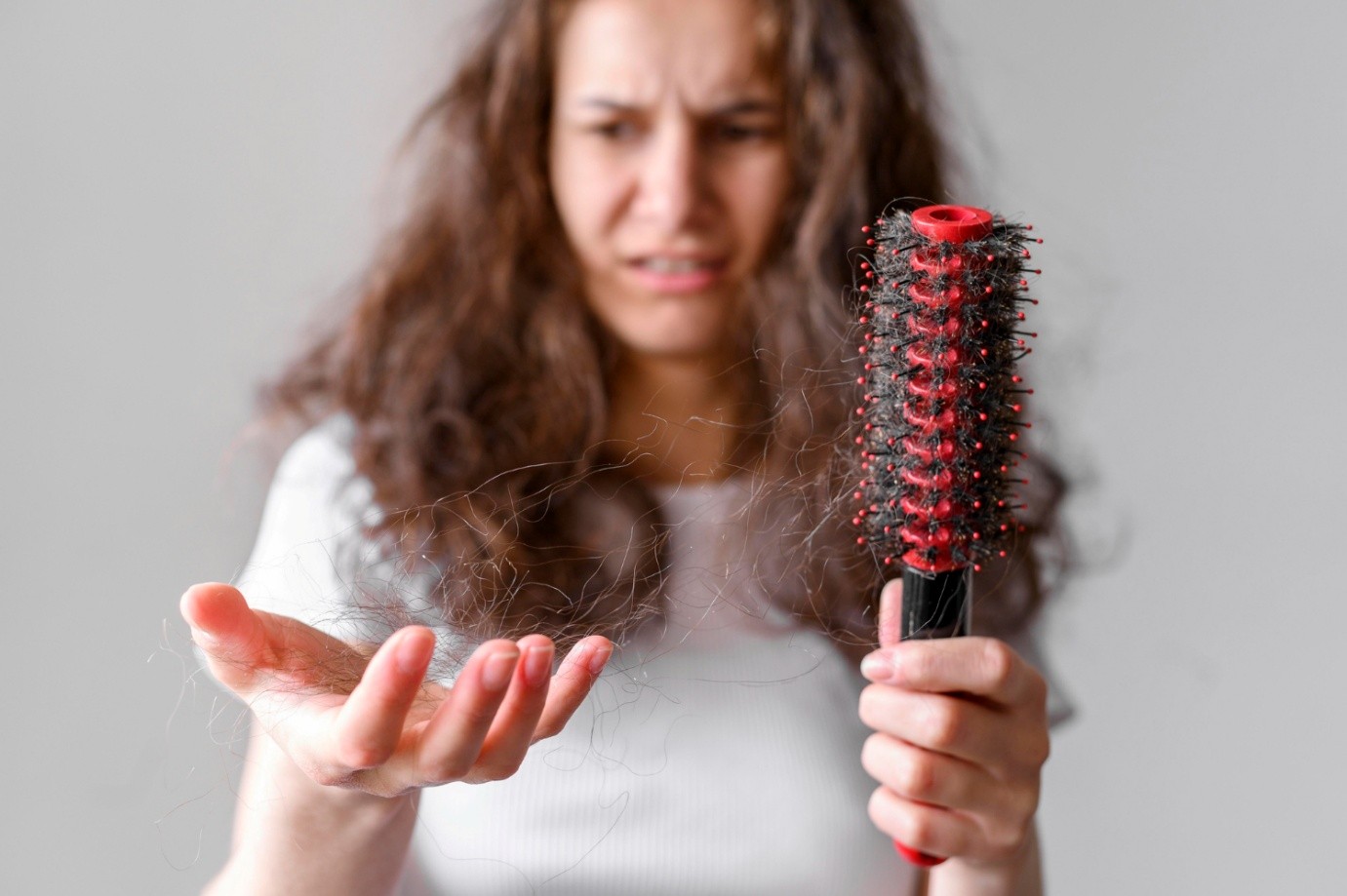
observing an unusual amount of hair on pillows, combs, bathroom floors, or while doing laundry.
Physical or mental stress, hormonal changes (such as those following childbirth or thyroid problems), nutritional deficiencies (iron, zinc, vitamins), certain drugs, or illnesses including autoimmune disorders are typically the causes of sudden hair loss, which is frequently telogen effluvium.
Particularly on the crown or separating line of the scalp, hair may appear thinner.
A spreading portion of hair typically indicates hair thinning, which is frequently caused by androgenetic alopecia (pattern baldness), genetics, hormonal changes (pregnancy, menopause, PCOS, thyroid), stress, poor nutrition, or harmful hairstyling, with reduced density and more scalp visible.
One common indicator of stress and hair loss in females is a noticeably wider hair part.
Because of things like fine hair type, product accumulation, oily scalp, heat damage, and bad styling methods, which weigh down strands and hinder natural lift, your hair lacks volume. In addition to lifestyle factors like stress or poor food, heavy conditioners, oils, or styling products, infrequent washing, and hard drying can flatten hair.
Braids and ponytails feel much thinner.
"No Bald Patches" refers to preventing or treating hair loss, frequently concentrating on conditions like Male Pattern Baldness (receding hairline/crown) or Alopecia Areata (patchy loss). Treatments like minoxidil are used to address nutritional deficiencies (protein, iron, and B vitamins), manage stress, ensure scalp health (massage for blood flow), and occasionally investigate options like hair transplants.
Stress-induced hair loss typically results in diffuse thinning rather than spots, in contrast to alopecia areata.
Hormonal sensitivity makes stress and hair loss more prevalent in women. Women frequently balance a variety of obligations, including work, family, and emotional labor, which raises levels of long-term stress.
Additionally, elements such as:
can exacerbate hair loss brought on by stress. Women are more susceptible to diffuse thinning and telogen effluvium when they experience emotional stress and hormonal instability.
Stress interferes with the hair growth cycle in two ways: either by releasing hormones like cortisol, which push hairs into the resting (telogen) phase prematurely, resulting in increased shedding (telogen effluvium), or by damaging stem cells that are necessary for growth, slowing regeneration, resulting in thinning, and possibly causing autoimmune problems like alopecia areata, which manifest months after the stressful event.
There are three stages to hair growth:
Stress causes hair to enter the telogen phase early and shortens the anagen phase. Visible thinning results from hair falling out more quickly than it can grow back.
Stress and hair loss: Will it grow back? is one of the most common inquiries.
Yes, hair loss due to anxiety or stress is usually treatable. Hair follicles progressively revert to the growth phase after stress levels are reduced and nutritional balance is restored.
Regrowth, however, can take three to six months, and consistent treatment, nutrition, and stress reduction are necessary for noticeable progress.
It takes a combination of medical care and lifestyle modifications to understand how to regain hair loss from stress.
Deep breathing, meditation, and yoga are examples of relaxation strategies. Lifestyle modifications include eating a balanced diet, exercising frequently, getting enough sleep, abstaining from drugs, and changing your perspective to accept what you can't change, manage your time, find humor, and connect with people.
To halt hair loss and promote hair growth, cortisol levels must be lowered.
A scalp treatment is a procedure that uses specific tools and methods to improve scalp health. With the appropriate equipment and supplies, the procedure can be completed at home or at a professional hair salon.
By activating dormant hair follicles, professional treatments such as PRP therapy can greatly increase regeneration. Customized treatment regimens based on the severity of your hair loss are guaranteed when you consult the best prp for hair specialist in powai.
A medical evaluation is a thorough assessment of a patient's health conducted by a licensed professional. It includes a review of the patient's medical history, a physical examination (listening, feeling, and observing), and frequently diagnostic tests (blood, urine, ECG) to determine general health, assess risk for insurance, or meet requirements for employment/fitness, guiding treatment and health decisions.
A hair specialist might suggest blood tests to measure thyroid, iron, vitamin D, and vitamin B12 levels. Recovery is accelerated when these inadequacies are corrected.
Stress-related hair loss can be effectively prevented by managing stress through methods like yoga, meditation, and regular exercise; maintaining a balanced diet high in protein, iron, and vitamins; prioritizing 7-9 hours of good sleep; using gentle hair care techniques; and, for persistent problems, seeking professional assistance from a dermatologist. Stress-induced hair loss frequently goes away when stress is under control.
A comprehensive approach is crucial for dealing with stress and hair loss—how to stop it.
Early intervention keeps transient stress-related hair loss from developing into a chronic condition.
Excessive shedding (more than 100 hairs per day), abrupt or patchy hair loss, noticeable thinning or receding hairlines, scalp problems (itching, redness, flakes), or the failure of over-the-counter treatments, particularly if hair loss affects your confidence or is accompanied by hormonal symptoms, fatigue, or weight fluctuations.
You ought to seek expert advice if:
Targeted therapy and a quicker recovery are guaranteed by an expert diagnosis.
There is a connection between stress and hair loss, but it is also controllable. When treated early, hair loss due to stress and anxiety is frequently transient and reversible. You can restore healthy hair growth by being aware of the symptoms, making lifestyle changes, and consulting a professional.
You can reclaim not only your hair but also your confidence by speaking with the best hair treatment expert in powai, the best prp for hair specialist in powai if you are suffering from significant hair loss.
1. Does stress actually lead to hair loss?
Indeed, telogen effluvium, which causes significant hair loss, can be brought on by long-term stress.
2. How long does hair loss brought on by stress last?
After stress levels are reduced, hair loss often lasts three to six months.
3. Which vitamins are beneficial for hair loss brought on by stress?
Biotin, Vitamin D, B12, iron, and zinc are key vitamins for hair loss due to stress.
Book your appointment online or call our team directly.