Skin cancer is one of the most prevalent cancers globally, but it ranks among the most preventable and treatable forms, provided it is detected early. The skin is perpetually exposed to environmental factors, particularly ultraviolet (UV) rays from the sun, which renders it susceptible to cellular damage. Outcomes can be improved significantly, the necessity for invasive treatments diminished, and lives saved through the early recognition of warning signs.
This detailed manual takes you through the various types of skin cancer, their initial symptoms, risk factors, preventive measures, and the appropriate times to consult a professional.
Skin cancer arises from the abnormal and uncontrolled growth of skin cells. The three predominant types include:
Arises from basal cells found in the lowest layer of the epidermis.
Begins in squamous cells located in the skin's upper layers.
The most dangerous type of skin cancer.
It is essential to detect it early because:
A lot of individuals disregard changes in skin condition or misidentify them as benign moles, rashes, or age spots. Understanding what to search for allows you to take action before cancer advances.
Although each kind of skin cancer acts differently, there are several early warning signs that are common to all types. Note that:
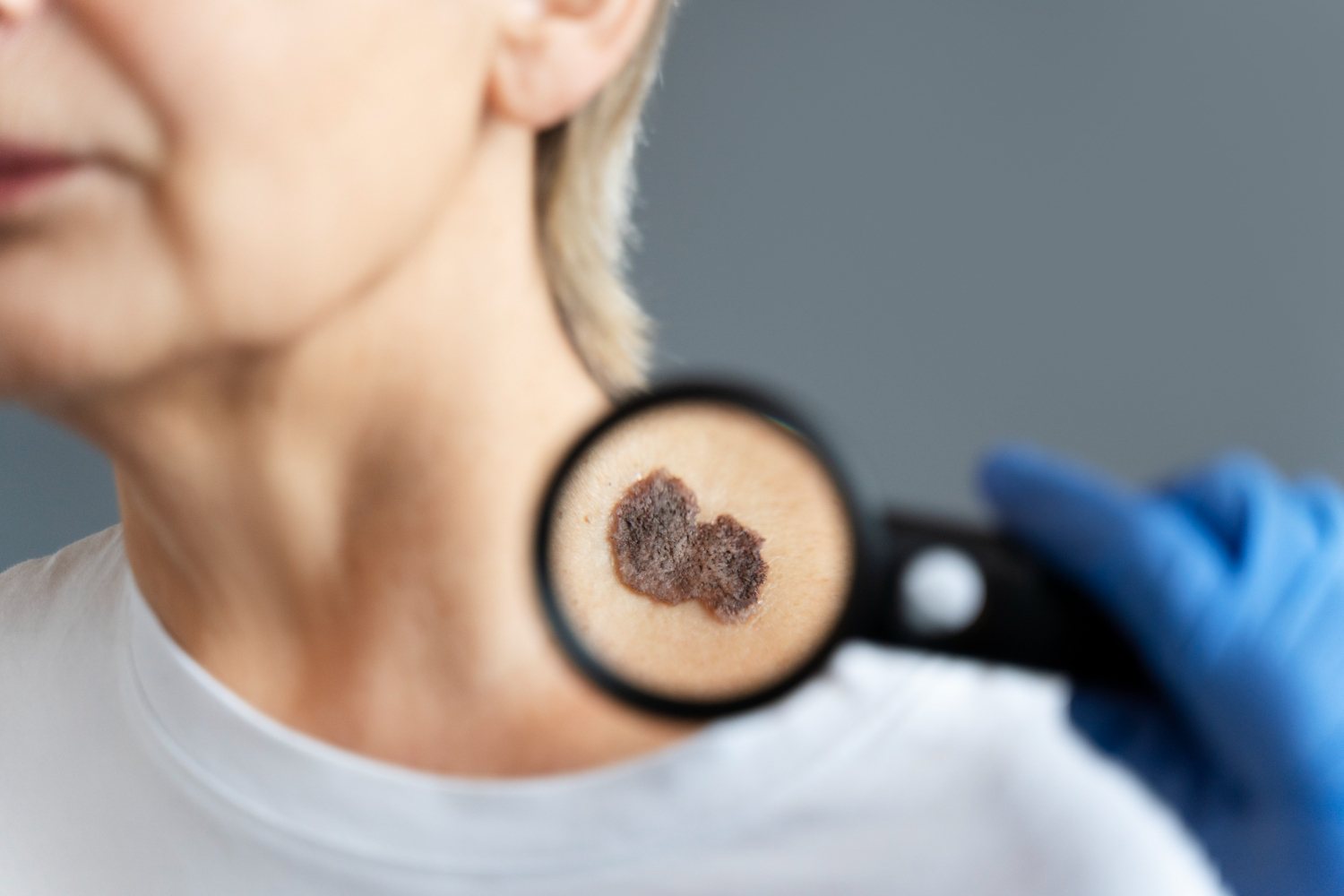
Any change in a mole’s size, shape, color, or texture should be a cause for concern. Moles that change in size or appearance rapidly may be a sign of melanoma.
A new bump, spot, or patch that looks different from other spots on your body should be assessed.
A wound that:
Lesions that itch persistently, feel painful, or become sensitive to touch may indicate something more serious.
A mole may indicate abnormal cellular activity when the skin around it becomes inflamed.
Any discharge or crust formation that persists is a red flag.
BCC often appears subtle at first. Search for:
A glossy, see-through protrusion—frequently in shades of pink, white, or matching the skin—typically located on the face, nose, or neck.
A lesion that is flat with a border that is slightly elevated may manifest on the trunk or arms/legs.
A sore that:
BCC often has a raised, rolled border with a central indentation.
SCC tends to be more aggressive than BCC. Watch for:
It may look like eczema or psoriasis, but treatment does not lead to improvement.
SCC may manifest as a hard-feeling raised lump that can grow rapidly.
At times, SCC can look like a wart that is continuously growing or developing a crust.
Areas exposed to sunlight, particularly the lips and ears, are frequent locations for SCC.
Melanoma is the most dangerous form of skin cancer. Detecting it early is essential.
Dermatologists recommend the ABCDE rule to evaluate moles:
One half looks different from the other.
Edges may be irregular, blurred, or jagged.
Multiple colors (brown, black, red, white, blue) or uneven shading are warning signs.
Larger than 6 mm (size of a pencil eraser), although melanomas can be smaller.
Any change in:
is the most important warning sign.
While anyone can develop skin cancer, certain factors heighten the risk:
Regular tanning, working outdoors, or experiencing sunburns.
Melanoma is closely associated with artificial UV radiation.
Those with:
Genetic predisposition significantly increases risk.
Individuals with HIV, those who have had organ transplants, or those on immunosuppressive drugs.
Moles that are atypical or dysplastic in particular.
Due to prolonged exposure to UV rays, older adults are more vulnerable.
Carry out self-exams every month to identify changes at an early stage. This is how:
Stand in front of a full-length mirror with bright light.
Don’t miss:
Tracking changes over time improves your ability to detect abnormalities.
A minor adjustment today could turn out to be significant in the coming weeks or months.
Seek medical attention if you notice:
To ensure a precise diagnosis of skin cancer, dermatologists might carry out dermoscopy, biopsies, or imaging examinations.
Skin cancer is largely preventable with the right habits.
Choose:
Apply generously and reapply every 2 hours.
Long sleeves, wide hats, UV-blocking sunglasses.
Between 10 AM and 4 PM, when UV radiation is strongest.
They significantly increase melanoma risk.
It is crucial to conduct dermatological examinations and self-checks on a regular basis.
It is essential to spot initial indicators of skin cancer for effective therapy and sustained health. Knowing how various forms of skin cancer manifest and progress allows you to spot red flags before they escalate. Monitor your skin carefully, take protective actions, and see a dermatologist if you notice any changes that seem suspicious.
Dr L H Hiranandani Hospital provides cutting-edge diagnostic facilities and individualized treatment plans designed for each patient's requirements, making it an excellent choice for professional skin assessments and advanced dermatological care. The hospital guarantees the early detection, precise diagnosis, and effective treatment of all skin conditions, including skin cancer, thanks to a team of expert dermatologists and advanced technology. Their skilled and caring specialists ensure your skin health is well looked after.
A new spot, a changing mole, or a sore that doesn’t heal within a few weeks is often the earliest and most common sign.
If you notice any mole or spot that changes in size, shape, color, or starts bleeding or itching, schedule an appointment promptly.
Yes. Regular sunscreen use, protective clothing, avoiding peak sunlight hours, and monthly skin self-exams significantly reduce risk.
Book your appointment online or call our team directly.