Styling with heat is now a crucial aspect of contemporary grooming. Whether you’re using heat tools to straighten your hair for a sleek look, curl it for added volume, or blow-dry it for quick styling, they make the hairstyling process fast and convenient. However, using high temperatures often can also put your hair at risk of serious damage. By comprehending the impact of heat on your hair and discovering appropriate protective measures, you can maintain hair health while enjoying your preferred hairstyles.
This blog delves into the ways in which heat styling harms hair, indicators of heat damage, optimal methods for its prevention, and crucial advice for keeping strands healthy even if you style often.
Hair mainly consists of keratin, a protein that is organized in layers. These layers start to deteriorate when they are subjected to heat that is either too intense or applied multiple times. This is how the damage develops:
Heat tools like straighteners, curling irons, and blow dryers usually operate at temperatures between 150°C and 230°C. The hydrogen and disulfide bonds within hair strands can be broken by these temperatures, resulting in decreased strength, elasticity, and resilience.
Elevated temperatures cause internal moisture to evaporate. Hair that lacks moisture becomes brittle and rough, and it is more susceptible to split ends.
The cuticle serves as the hair's outer protective layer. When heat is excessive, it causes these protective scales to lift or crack, which leaves the hair open to environmental damage, frizz, and tangling.
If your hair has been treated with chemicals (such as coloring, bleaching, or smoothening), it becomes even more delicate. When hair is weakened, using heat styling can raise the chances of breakage and irreversible damage.
Identifying heat damage at an early stage can avert additional injury. Pay attention to:
Upon noticing these symptoms, you should reassess your heat styling routine and add protective measures.
As long as you take precautions, heat styling doesn’t have to damage your hair. Here are some expert-approved tips for keeping your strands safe:
Your hair’s primary safeguard is a heat protectant. It forms a protective layer between the heat tool and your hair, which helps to decrease moisture loss and limit structural damage.
What to look for in a heat protectant:
Better styling doesn’t come from more heat. Select temperatures that are appropriate for your hair type:
Do not exceed temperatures of 200°C, since they considerably heighten the risk of irreversible harm.
Try limiting heat styling to 2–3 times a week. An alternative for other days is:
Switching up your routine can protect your hair while maintaining style versatility.
Moisture is essential for elasticity and strength.
Include the following in your routine:
Hydrated hair is much more resistant to heat damage than dry hair.
Low-cost tools frequently generate inconsistent heat, resulting in uneven harm.
Choose tools that offer:
It is possible to greatly decrease long-term damage by investing in a high-quality tool.
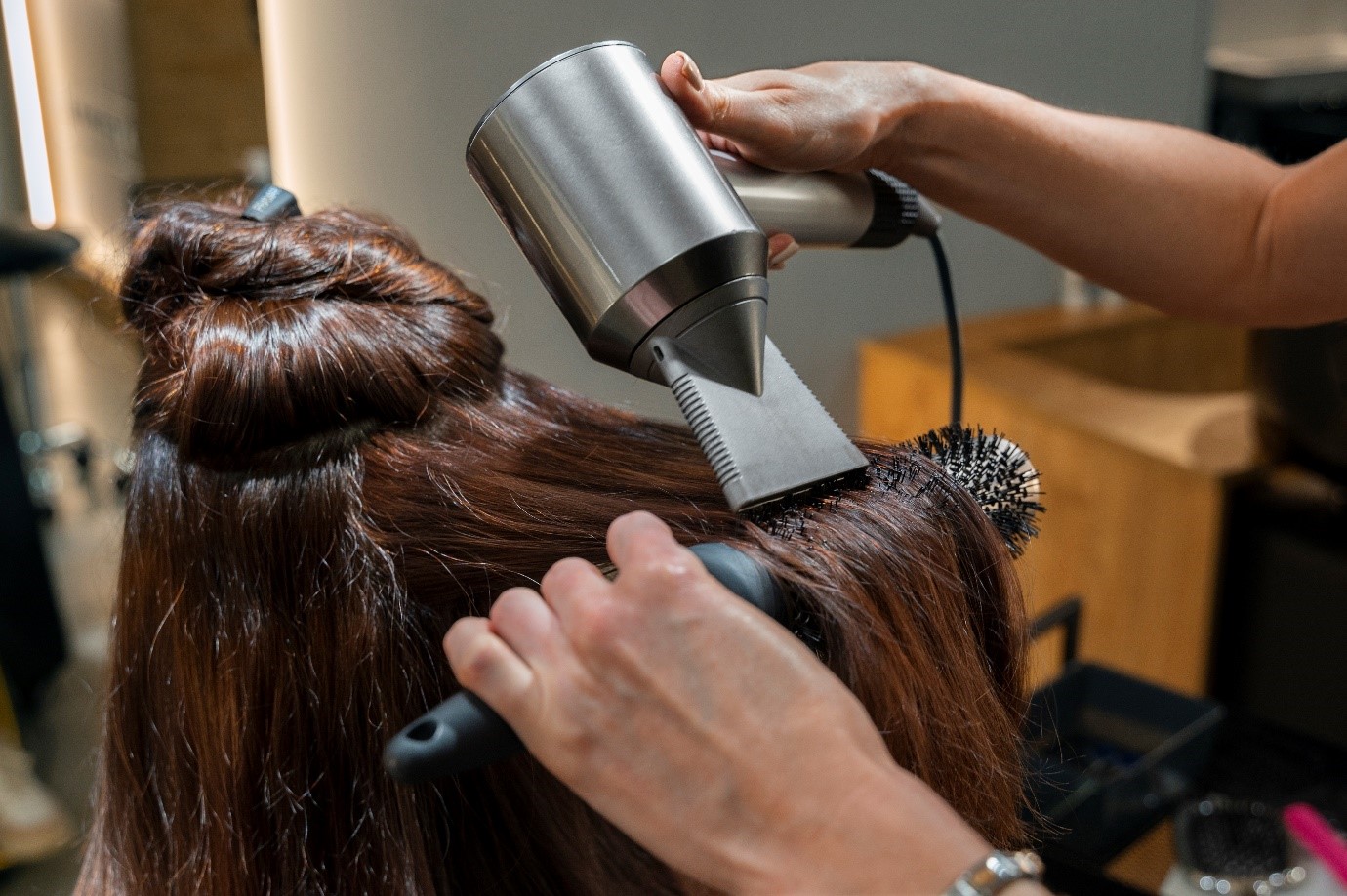
Blow drying can be gentler than flat ironing—if done right.
Safe blow-drying practices:
This method reduces heat exposure and aids in attaining smooth results.
When flat-ironing wet hair, steam is produced that “boils” the water within each strand, resulting in serious cuticle damage. Before using hot tools, always make sure that your hair is completely dry (90–100%).
Splitting ends caused by heat-damaged hair can move up the strand if they are not eliminated.
To maintain your hair's health, softness, and manageability, get it trimmed every 8 to 12 weeks.
Protein aids in the reconstruction of weakened hair bonds. Search for products that include:
Apply protein treatments every 2–4 weeks, but avoid excessive use, as too much protein can lead to hair stiffness.
Hair that has been styled with heat frequently gets tangled or breaks during the night.
Night protection tips:
These methods lessen resistance, maintaining the hair’s smoothness and integrity.
Various hair textures react differently to heat. Here’s how to customize your approach:
Curly hair is naturally more fragile due to its structure.
Protective tips:
If your hair is displaying signs of heat damage, don’t fret—many effects can be reversed with regular care.
Steps to repair:
Although hair that has been burnt severely may not completely bounce back, its texture and appearance can be greatly enhanced with regular care.
It can be very helpful to consult a dermatologist or trichologist if you have ongoing issues with dryness, hair loss, or breakage. Professionals can identify root causes—like lack of proper nutrients, scalp ailments, or fragile hair roots—that exacerbate the impact of heat styling.
While heat styling can change your hair for the better, it can also lead to lasting harm if not approached with care. Utilizing heat protectants, managing temperatures, keeping your hair hydrated on a regular basis, and opting for high-quality tools can help you maintain lovely hairstyles while protecting your hair’s health. To keep your hair luscious and free of damage, consistent care, wise styling habits, and occasional professional advice are very helpful.
Our state-of-the-art dermatology and trichology departments at Dr. L. H. Hiranandani Hospital provide innovative treatments aimed at restoring and safeguarding hair health. Our specialists offer a complete range of personalized treatments, from individualized scalp evaluations to targeted interventions for hair thinning, breakage, and damage. We assist you in attaining stronger, healthier hair with enduring results through our top-notch facilities and patient-centered strategy.
Q. How often is it safe to use heat styling tools?
Limit heat styling to 2–3 times per week to minimize damage.
Q. Do heat protectants really work?
Yes, they reduce moisture loss and help protect hair from high temperatures.
Q. Can heat-damaged hair be repaired?
Mild to moderate damage can improve with hydration, protein treatments, and trims, but severely burnt hair may need to be cut.
Book your appointment online or call our team directly.