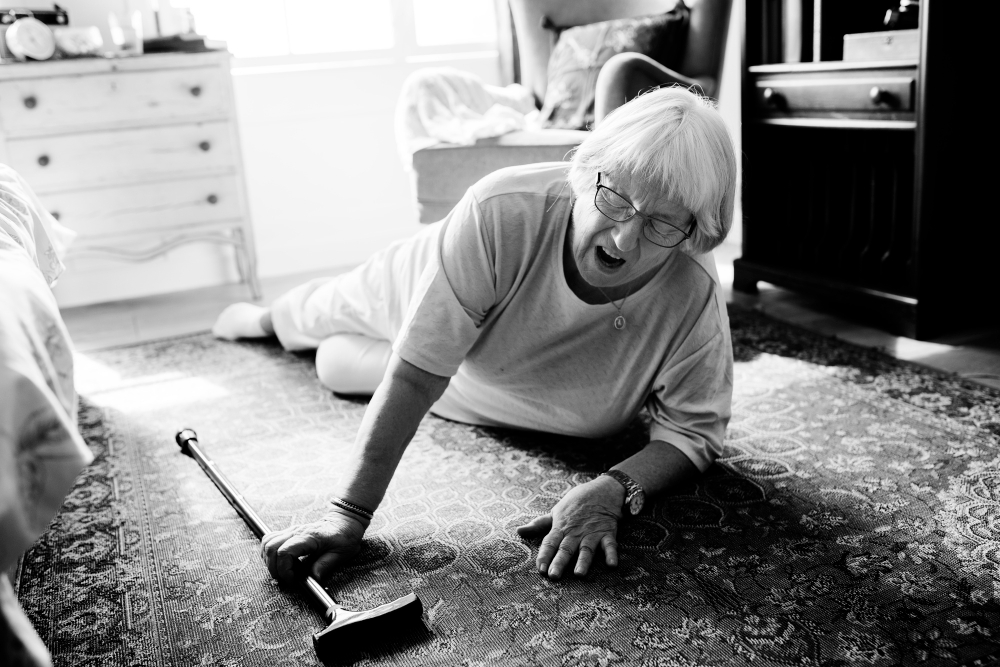
When an elderly person recovers from a fall without visible injuries, it may appear to be a minor mishap. But a fall should never be written off as "just a stumble" after the age of sixty. Falls can cause injuries that are not immediately noticeable and can occasionally be a sign of an underlying health issue.
The risk of falling can rise with age due to changes in bone density, medicine, balance, muscular strength, vision, and reaction time. A single fall can also result in diminished confidence, decreased physical activity, loss of independence, and fear of falling again.
Seniors can maintain their independence and level of activity by being aware of the reasons behind unexpected falls, understanding the consequences of falls in the elderly, and adopting the necessary precautions.
This article outlines why falls should be treated medically, what to look out for, and how seniors and their families can lower their risk of falling again.
Several systems that are in charge of preserving stability and reacting to threats may be impacted by aging.
Elderly people may encounter:
Recovering following a trip or loss of balance may be more challenging due to these considerations.
Not all injuries are visible right away.
A person may feel well at first but eventually develop:
Sometimes, when symptoms are mild, head injuries and fractures go unnoticed. Because of this, a serious fall should be treated seriously, especially if the victim hits their head or takes blood thinners.
In case you're wondering, "What are 3 common causes of falls?" Three major categories are very crucial:
However, rather than being caused by a single problem, falls are frequently the result of multiple circumstances.
Maintaining stability may be more difficult if lower-body strength is diminished.
A few circumstances that could impact balance are:
Some of these dangers can be mitigated with sufficient strength and balance training and regular exercise.
Preventable falls can be greatly decreased by creating a safe home environment.
Typical risks consist of:
Everyday mobility can be made safer with easy house changes.
Balance, strength, awareness, blood pressure, and coordination can all be impacted by certain medical problems.
Additionally, certain drugs may result in:
When taking numerous drugs, older persons should consult their doctor or pharmacist on a regular basis.
The causes of falling down suddenly can vary greatly.
A quick drop could be caused by:
Dizziness or fainting may result from a sudden drop in blood pressure, especially after standing.
A measurement of less than 90/60 mm Hg is considered low blood pressure, or hypotension.
Low blood glucose can cause weakness, disorientation, or lightheadedness in diabetics.
When your blood glucose level falls below 70 mg/dL (3.9 mmol/L), you have hypoglycemia, or low blood sugar.
A sudden fall could result from certain heart disorders that induce dizziness or fainting.
Arrhythmias, or disorders with cardiac rhythm, occur when the electrical signals that instruct your heart to beat do not function properly. Your heart may beat irregularly, too quickly, or too slowly.
Fall risk may be increased by conditions that impact movement, balance, coordination, or sensory.
Medical disorders that impact the brain, spinal cord, and nerves throughout the body are known as neurological illnesses.
It can be challenging to recognize steps, uneven surfaces, and obstacles if one has poor vision.
Vision difficulties, which can result from minor focusing errors or major medical diseases, involve changes or losses in your ability to see well.
Certain medications may impair alertness or balance.
Therefore, aging should not be instantly blamed for a sudden or inexplicable fall. To find out if the fall was caused by an underlying issue, a medical evaluation might be necessary.
Unintentional, secondary reactions brought on by prescription medications, over-the-counter goods, or supplements are known as medication side effects.
The consequences of falls in the elderly might go far beyond physical injury.
Older persons may have weaker bones, especially if they have diminished bone density or osteoporosis.
Fractures from falls may involve:
Because hip fractures can seriously impair movement and freedom, they are very dangerous.
A concussion or other severe harm may result from a fall that hits the head.
Some warning indicators could be:
These symptoms need to be evaluated by a doctor very once.
Following a severe fall, an elderly person may require ongoing or temporary help with:
Some persons can restore function with the right support and early rehabilitation.
There are other issues besides the physical harm.
Following an accident, many elderly people acquire a fear of falling.
They might start staying away from:
Regrettably, inactivity can result in decreased muscle strength and balance, which could raise the risk of falls in the future.
Restoring confidence can be aided by a well-thought-out exercise and rehabilitation regimen.
The objective is to assist the person in continuing to engage in safe activities rather than just preventing another fall.
Frequent falls in middle-aged women should be addressed seriously, rather than being attributed to fatigue or lifestyle.
Recurrent falls could be linked to:
Appropriate health assessment is crucial since women who are nearing or going through menopause may also experience changes in muscle mass and bone health.
Speaking with a healthcare provider might help discover possible treatable risk factors if falls are becoming more common.
When done properly and securely, exercise is a crucial part of preventing falls.
Three areas are frequently the focus of fall prevention exercises for seniors:
Stability and daily mobility can be supported by strengthening the legs, hips, and core.
Examples could be:
Exercises should be tailored to the individual's health and level of fitness.
Stability can be enhanced using balance exercises.
Examples could be:
These exercises should be carried out under the proper supervision by older persons who have serious balance issues.
Stretching gently might help with joint movement and mobility.
An exercise regimen can be customized by a physiotherapist or other skilled healthcare provider, especially for someone who has already fallen.
Don't pick up an elderly person right away if they fall.
Check to see if they seem hurt first
Search for:
Avoid needless movement and seek emergency medical attention if a significant injury is suspected.
The person may receive assistance in accordance with the proper instructions if they seem unharmed and are able to move around safely.
Most critical, rather than just assisting the person in getting back on their feet, find out why the fall occurred.
An older adult's medical assessment is especially crucial when:
A medical expert can evaluate injuries and look into whether the fall was caused by an underlying medical condition.
After learning that falls can have major health consequences, people frequently look up life expectancy after falls in the elderly.
After a fall, there isn't a single life-expectancy estimate that applies to all older adults.
The result is influenced by things like:
An individual's life expectancy is not determined by a fall alone. On the other hand, severe injuries and extended immobility can have detrimental effects on one's health.
For this reason, early assessment, rehabilitation, diet, exercise, and prevention of further falls are crucial.
Senior fall prevention can be greatly aided by family members.
Keep an eye out for changes like:
Frequent evaluations can assist in identifying neurological, cardiovascular, musculoskeletal, pharmaceutical, or visual problems that may be linked to falls.
Frequent checkups allow for the early detection of concealed health issues before they worsen.
Instead of total inactivity, promote proper strength and balance workouts.
Always begin slowly, pay attention to your body, and have a strong chair or wall close by for support in order to promote safe exercise.
Safety can be greatly increased with little environmental adjustments.
Install functional carbon monoxide and smoke detectors on each floor of your house to make it safer. You should also fasten large TVs and furniture to the walls to avoid hazardous tip-overs.
A fall after age 60 should never be discounted as an unavoidable aspect of aging. Fractures, head injuries, decreased mobility, fear of falling, and loss of independence are possible outcomes. More significantly, an unexplained or recurring fall may indicate a health issue.
Risks can be decreased by adopting suitable fall prevention exercises for seniors, identifying the consequences of falls in the elderly, and understanding the reasons of unexpected falls.
Consult a healthcare provider if you or a loved one falls, particularly if it is unexpected, unexplained, or occurs frequently. Early evaluation offers the chance to create a customized prevention strategy while assisting in the identification of injuries and possible causes.
The objective is to help older persons stay safe, active, self-assured, and independent for as long as possible rather than just preventing falls.
A fall may result in an undetected injury or reveal a medical condition that affects blood pressure, balance, vision, the heart, or the neurological system. Additionally, fractures and post-injury problems may be more common in older persons.
Environmental risks, medical disorders or drug side effects, and balance or muscle weakness are the three main causes. A single individual may experience multiple variables at once.
After a fall, there is no standard life expectancy. The individual's age, health, degree of damage, mobility, underlying conditions, and recuperation all affect the results. The proper medical examination and follow-up should be provided after a serious fall.
Book your appointment online or call our team directly.