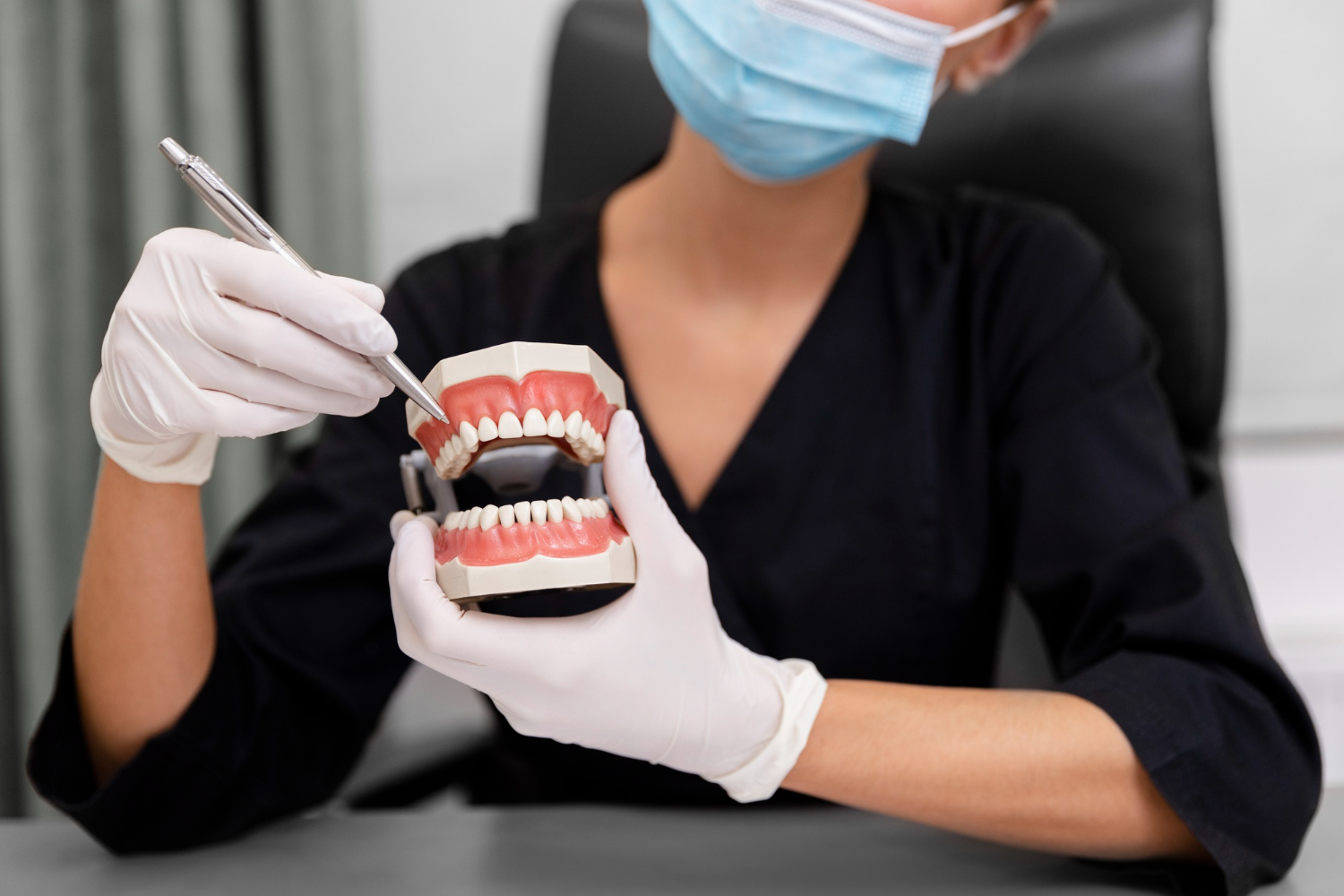
Teeth can be lost as a result of trauma, aging, gum disease, or decay—but the consequences are much more far-reaching than merely cosmetic. The absence of teeth can impact your self-esteem, speech, ability to chew, facial structure, and oral health over time. Fortunately, there are several replacement options available in modern dentistry, with dental implants being regarded as the gold standard among them. They offer a natural appearance, enduring durability, and a comfort level that closely resembles that of real teeth.
At what point should a person really think about getting dental implants? Is everyone suited to them? What advantages do they provide, and what should you be wary of? This comprehensive blog will assist you in grasping the optimal timing, benefits, and constraints of dental implants, enabling you to make a well-informed choice.
Dental implants, which are usually constructed from titanium or zirconia, serve as artificial tooth roots and are surgically inserted into the jawbone. Through a process known as osseointegration, the bone gradually grows around them, establishing a stable base for replacement teeth like crowns, bridges, or dentures.
A complete dental implant system usually includes:
This structure enables implants to more closely mimic the function and appearance of real teeth than any other method of tooth replacement.
People who have lost all their teeth are not the only ones who can use dental implants. They are appropriate for various situations:
If you’ve lost a tooth from decay, gum disease, or injury, implants can effectively fill the void. Not treating a missing tooth can lead to:
A dental implant aids in maintaining your oral structure and reinstating complete functionality.
Traditional dentures may slip, click, or cause soreness. If you have difficulty with:
Then, for stability and comfort, implant-supported dentures (known as overdentures) can be used.
To install dental bridges, it is necessary to grind down adjacent healthy teeth in order to place supporting crowns. Since they do not rely on surrounding teeth, implants provide a more conservative option for preserving your natural tooth structure.
With the right care, dental implants can endure for 20–30 years or even a lifetime. If you would rather invest in something long-lasting than replace things periodically, implants might be the better choice.
Once a tooth is lost, the jawbone starts to weaken. Implants provide stimulation to the bone akin to that of natural roots, assisting in the maintenance of:
When early bone loss is identified, implants can help avert additional deterioration.
Implants look and feel very much like natural teeth. If you care about aesthetics, implants provide one of the most seamless outcomes.
Although most adults are suitable for implants, certain conditions indicate that you are an ideal candidate:
Advanced methods like bone grafting or sinus lifts can still make implants feasible, even if your bone supply is inadequate.
Dental implants offer a range of advantages, which is why they are among the most popular restorative choices.
Implants resemble and feel like your own teeth. As they fuse with your jawbone, they do not shift or move like dentures do.
Benefits include:
While bridges or dentures might need to be replaced often, implants can endure for decades. Once integrated, the titanium post seldom needs to be replaced.
With implants, you can enjoy:
While eating or talking, dentures can slide out of place; implants remove this issue.
The roots of teeth provide stimulation to the jawbone. The absence of teeth causes bone shrinkage to commence. Implants imitate natural roots and assist in averting bone loss.
This reduces the risk of:
Implants are standalone, in contrast to bridges. This maintains the strength and enamel of adjacent teeth.
Dental implants do not need special products or adhesive creams. Regular brushing, flossing, and dental check-ups suffice.
With a success rate of 95–98%, dental implants are among the safest dental procedures.
Although implants provide considerable advantages, they are not appropriate for everyone. Grasping the disadvantages can help you make better decisions.
In general, the costs of implants are higher than those of bridges or dentures. Nonetheless, due to their longevity, they are regarded as a valuable investment by many.
Implants involve minor surgery. Risks include:
Opting for a skilled dentist specializing in implants significantly diminishes these risks.
Osseointegration can take 3 to 6 months prior to placing the final crown. Certain patients might require:
This timeline may be inconvenient for those seeking an immediate solution.
Low density of the jawbone complicates implants. Although bone grafting can be done, it introduces additional time, expense, and complexity.
Smoking has an impact on healing and raises the likelihood of implant failure. For optimal results, patients need to dedicate themselves to either reducing their smoking or quitting it altogether.
Although uncommon, implants may experience complications such as:
These issues are usually easily repairable.
You should consider implants sooner rather than later if:
Postponing treatment can result in bone loss, which complicates implant placement later on.
Understanding the process can help eliminate fear or confusion.
Your dentist will evaluate:
The dentist inserts the titanium post into the bone while the patient is under local anesthesia. Healing starts straight away.
Over the course of several months, the bone fuses with the implant. A provisional tooth may be offered.
After the healing process, the abutment is affixed to the implant.
A fully aesthetic and functional restoration is achieved with a custom-made crown affixed on top.
For the majority of individuals, dental implants are a worthwhile investment because of their:
They not only restore your smile but also significantly improve quality of life.
Dental implants provide a highly advanced, long-lasting, and natural-looking option for replacing teeth. If you have missing teeth, dentures that don’t fit properly, or if you’re looking for a long-term restoration that preserves your facial structure and bite, you should take them into account. Nevertheless, implants are associated with greater expenses, necessitate an operation, and entail a lengthier recovery phase.
Related: Foods That Promote Strong Teeth and Gums
For those contemplating dental implants, selecting the appropriate healthcare facility is equally as crucial as choosing the treatment. World-class dental implant solutions, supported by advanced technology, skilled implantologists, and patient-centered care, are offered at Dr L H Hiranandani Hospital. With a focus on precision and safety, the team of top dentists in Mumbai at our hospital provides tailored treatment plans to achieve results that are both durable and natural in appearance. Whether you need to replace one tooth or are looking for a complete mouth restoration, Dr L H Hiranandani Hospital offers the expertise and assistance necessary for a confident and healthy smile.
No, the procedure is done under local anesthesia. Mild soreness afterward is normal and temporary.
With proper care, implants can last decades; the crown may need replacement after 10–15 years.
Yes. As long as gums, bone, and general health are good, age is not a barrier.
Book your appointment online or call our team directly.