
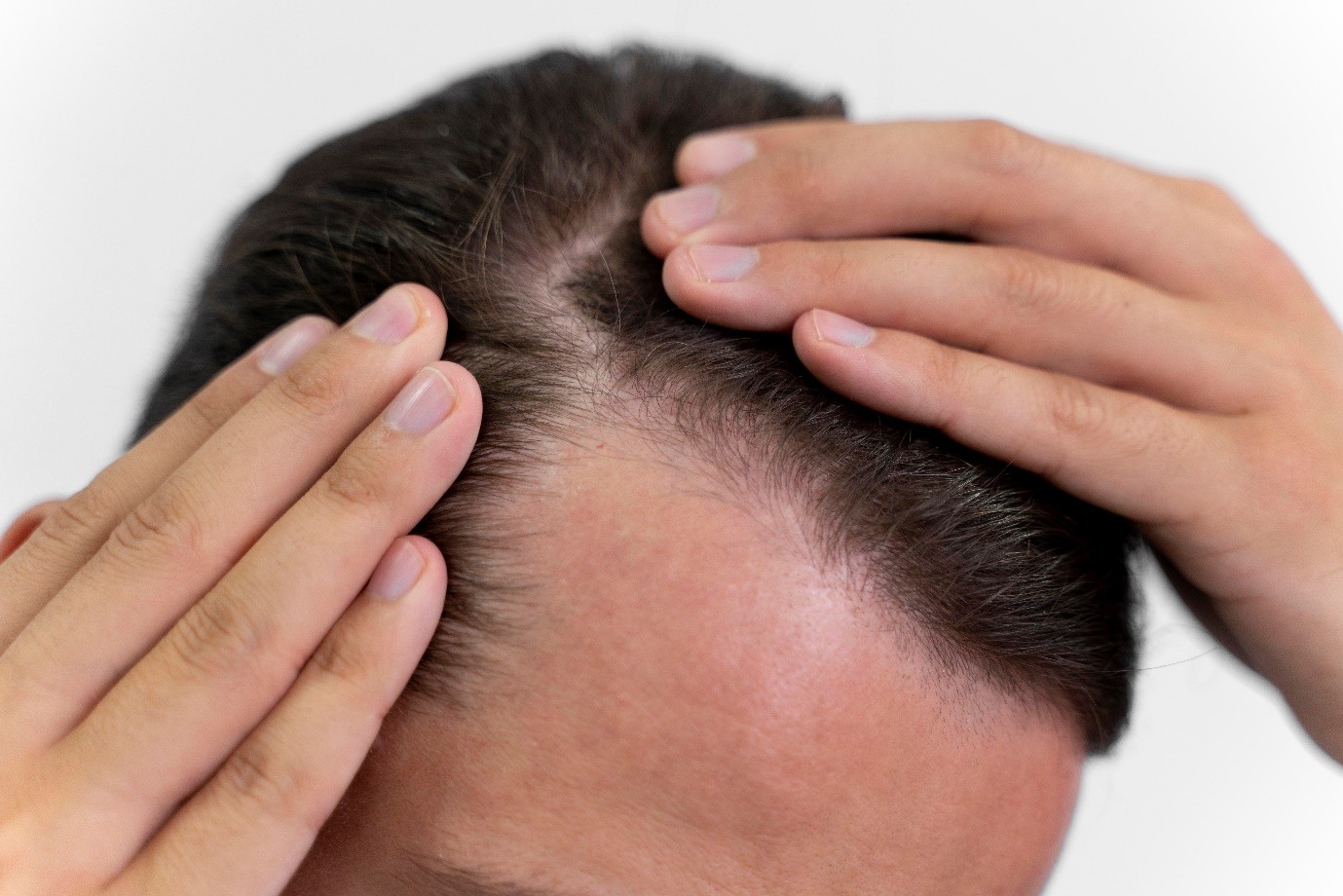
Millions of individuals around the globe are impacted by hair loss, which is a highly personal experience. Although genetics, stress, nutrition, and lifestyle significantly impact the situation, hormones are among the most influential factors. Hair loss can be triggered or exacerbated by hormonal imbalances in both men and women, often resulting in thinning hair, receding hairlines, or extensive shedding.
In order to manage hair loss more effectively, it is crucial to comprehend the functioning of hormones, their interactions with hair follicles, and the reasons why imbalances in hormonal levels result in alterations to hair growth.
This blog examines the various hormones that affect hair health, the categories of hormonal hair loss, symptoms to be aware of, and viable remedies.
Hair grows in cycles, comprising three primary phases:
Hormones have a direct effect on the duration of these phases.
With balanced hormones, hair remains in the anagen phase longer, resulting in thicker and stronger growth. However, when hormones are out of balance, this phase becomes shorter and more hair is moved into the telogen phase, leading to shedding, thinning, and weaker strands.
DHT, a testosterone derivative, is primarily responsible for androgenetic alopecia, the most prevalent type of hair loss.
How DHT Causes Hair Loss
Who Is Affected?
Testosterone and DHT are produced by both men and women.
However:
Your follicles' sensitivity to DHT is determined by genetics.
It is well known that estrogen provides women with thicker, fuller hair. It extends the anagen phase, which aids in improved hair growth.
When Estrogen Drops, Hair Falls
Low estrogen levels can lead to:
Triggering Situations
Pregnancy brings about elevated estrogen levels, resulting in hair becoming thick and abundant. Following childbirth, these estrogen levels plummet, which causes telogen effluvium—a temporary hair loss condition.
Progesterone aids in mitigating the effects of androgens such as testosterone.
A decrease in progesterone levels can lead to a condition of androgen dominance, resulting in an increased conversion of testosterone into DHT — which contributes to heightened shedding.
Low Progesterone can cause:
Women who are managing the following often have a progesterone imbalance:
Thyroid hormones control metabolism and the rate of cell turnover, which encompasses hair follicle activity.
Significant hair loss can be caused by both hypothyroidism (low thyroid) and hyperthyroidism (high thyroid).
Symptoms of Thyroid-Related Hair Loss
Hair loss linked to thyroid issues usually progresses slowly and can be reversed with appropriate treatment.
Cortisol levels rise due to chronic stress, leading to disruptions in the hair growth cycle.
How Stress Leads to Hair Loss
Telogen effluvium, a prevalent form of hair loss triggered by stress, involves major shedding that manifests 2 to 3 months post stressful events.
Elevated insulin levels and insulin resistance (which is common in PCOS) can boost androgen production, resulting in:
IGF-1 (Insulin-like Growth Factor) usually aids in hair growth, but an imbalance can interrupt the cycle.
PCOS triggers elevated androgens, leading to:
During menopause:
This leads to an overall thinning effect, reduced volume, and decreased growth rate.
Post-delivery, there is a rapid decline in estrogen levels, which results in sudden excessive shedding (typically temporary).
The initiation or cessation of specific hormonal contraceptives can induce shedding.
Primarily caused by:
Results in:
While an excess of DHT is detrimental, testosterone levels that are too low can weaken roots and impede growth.
Cortisol, which is driven by stress, throws off the balance of testosterone and disrupts the hair cycle.
If you observe the following, you might be experiencing hormone-related hair loss:
Doctors may evaluate levels of:
The diagnosis assists in identifying the specific hormone responsible for hair loss.
For Androgenetic Alopecia
For Women
For Thyroid Disorders
For PCOS
Foods rich in:
These nutrients promote healthy hair growth.
Stress Management
Lowering cortisol improves hormonal balance.
Scalp Care
Exercise
Regular exercise enhances metabolic processes, reduces insulin resistance, and helps balance hormones.
These treatments improve follicle function and stimulate growth.
Indeed—in many instances, if identified at an early stage, hormonal hair loss can be slowed down, halted, or even reversed.
More easily reversible:
Harder to reverse:
Early diagnosis and treatment give the best outcomes.
Hormones are crucial for hair health, affecting the duration of hair growth, its strength, and its shedding frequency. Hair loss may happen when hormones change — due to age, stress, medical conditions, or reproductive changes. By comprehending these hormonal mechanisms, you can gain control, pursue prompt medical assistance, and select appropriate treatment.
In regard to the diagnosis and treatment of complex causes of hair loss, Dr L H Hiranandani Hospital is distinguished as one of the most reliable medical establishments in Mumbai. The hospital offers advanced diagnostic tests, personalized treatment plans, and state-of-the-art procedures such as PRP therapy and laser treatments, thanks to a skilled team of dermatologists, endocrinologists, and trichology specialists. It is a trustworthy option for those looking for long-term, effective answers to hair loss, thanks to its patient-focused strategy, cutting-edge amenities, and dedication to thorough hair and hormone health.
Q. Can hormonal hair loss grow back?
Yes, once hormones stabilize, although long-term pattern baldness may need treatment.
Q. How do I know if my hair loss is hormonal?
Thinning, excessive shedding, cycle changes, acne, or stress-triggered hair fall often point to hormones.
Q. Can lifestyle changes help?
Yes. Reducing stress, improving sleep, and eating balanced meals support hormone balance and hair growth.
Book your appointment online or call our team directly.


