
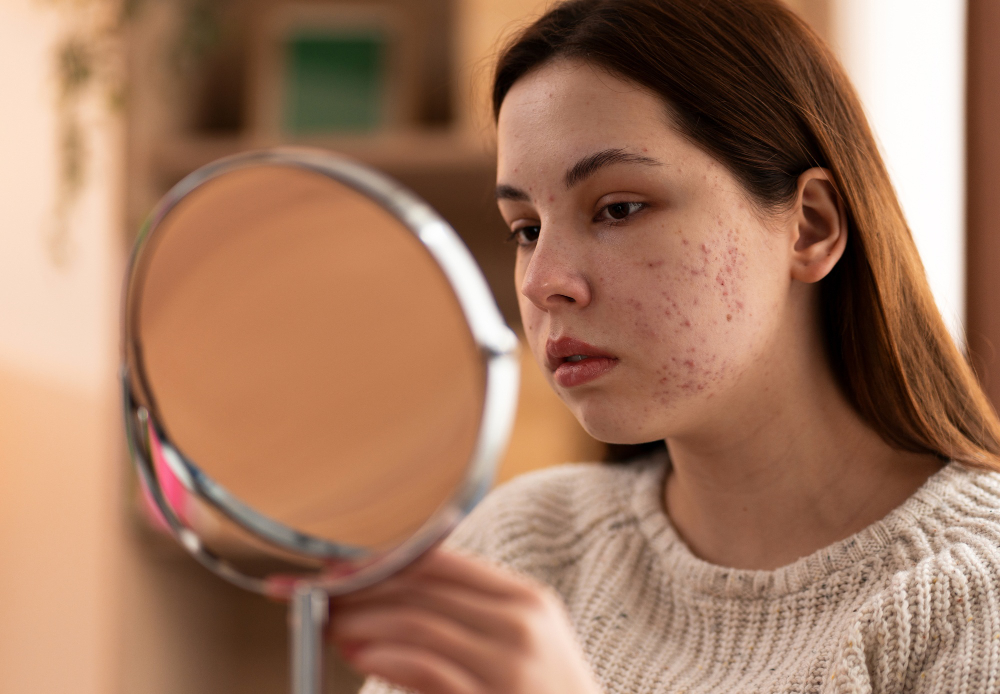
Although acne can diminish over time, the scars it leaves often pose a long-term issue. Acne scars, whether they manifest as deep pits, raised bumps, or dark marks, can impact not only the appearance of the skin but also a person’s confidence. Fortunately, there is a broad selection of advanced treatments in modern dermatology that can greatly enhance the skin’s texture, tone, and overall look.
This all-encompassing manual examines the development of acne scars, the different types of scars, and the most effective advanced treatment methods available today. Individuals can make knowledgeable choices to attain clearer, smoother skin by comprehending these options.
Inflammation in the deeper layers of the skin leads to the development of acne scars. The body tries to mend the damage caused by a breakout by generating collagen. At times, this healing process is interrupted, resulting in either an excess or a deficiency of collagen. Consequently, scars can develop in the following manners:
Other elements that affect scar development are genetic predisposition, acne severity, inappropriate pimple popping, and postponement of treatment.
It is essential to identify the type of acne scarring, as each type reacts differently to treatment. The primary categories consist of:
These are the most common acne scars and include:
These raised scars form as a result of excess collagen production during the healing process. They are frequently found on the chest, back, and jawline.
Even though they are not real scars, these brown or red marks that remain after acne fades can still affect one’s appearance. They usually have a good response to chemical peels and laser treatments.
There have been considerable advancements in dermatology, resulting in methods that renew the skin surface, boost collagen production, or disintegrate scar tissue. The type, depth, and severity of the scar influence the choice of treatment.
Listed below are a few of the advanced options that work best:
Benefits of Laser Treatments
This entails the use of very thin needles to induce micro-injuries on the skin, thereby enhancing collagen production. It works well for mild to moderate atrophic scars and entails minimal recovery time.
Radiofrequency (RF) Microneedling
A more sophisticated version that provides heat deep into the skin for improved tightening and scar enhancement.
Why RF Microneedling is highly preferred:
Treats deeper scars
Improves skin elasticity
Safe for all skin types
Short recovery time
By eliminating damaged outer skin layers, chemical peels promote a smoother texture and reduced pigmentation.
Type of Peels for Acne Scars:
To achieve the best results, it is recommended to schedule multiple sessions at intervals of several weeks.
Subcision is a minimally invasive technique that involves inserting a specialized needle under rolling or tethered scars to disrupt the fibrous bands that are pulling the skin downward.
Advantages:
It is often apparent that depressed scars have been lifted immediately.
Fillers are most effective for deep, indented scars, particularly boxcar and rolling scars.
Types of Fillers Used:
Hyaluronic acid fillers – temporary but safe and natural-looking
Collagen-stimulating fillers (e.g., Sculptra) – long-lasting effects
Benefits:
With PRP, growth factors that promote healing and collagen development are extracted from the patient’s own blood.
How PRP Helps Acne Scars:
PRP is frequently combined with microneedling or subcision for superior outcomes.
Microdermabrasion: A mild procedure that removes dead skin cells from the surface of the skin. Beneficial for superficial scars or pigmentation.
Dermabrasion: Specialists use a rotating device to perform a deeper resurfacing technique that removes damaged layers.
Effective for:
This method necessitates experience and meticulous post-care.
TCA CROSS (Chemical Reconstruction of Skin Scars) is targeted specifically at ice pick scars.
How It Works:
For deep, narrow scars that are challenging to treat, this method often yields remarkable enhancements.
Each person’s skin and scars are one of a kind. Before recommending a treatment plan, dermatologists take various factors into account:
Various scars necessitate various methods. Ice pick scars benefit from TCA CROSS, while rolling scars respond well to subcision, for example.
Some lasers may not work well on deeper skin tones. Treatments based on RF are safer options.
Microneedling provides quicker healing, while CO₂ lasers come with longer recovery times.
Certain treatments, such as fillers or RF microneedling, might necessitate several sessions.
For the best results, it is often most effective to combine different methods.
A tailored treatment plan guarantees the optimum outcome while minimizing risks.
Care after treatment is essential to optimize results and avert complications. It is typical for dermatologists to recommend:
Being consistent is the secret to effectively managing scars.
Relavent blog:- https://www.hiranandanihospital.org/blog-details/benefits-of-chemical-peels-for-skin-rejuvenation
You no longer have to worry about acne scars for your entire life. Today, with the variety of advanced dermatological treatments available—such as lasers, microneedling, subcision, PRP, fillers, and more—achieving clearer and smoother skin is attainable. Personalized treatment plans created by skilled dermatologists who recognize the unique characteristics of each scar type yield the best results.
Dr. L. H. Hiranandani Hospital offers advanced dermatology services supported by cutting-edge technology and highly skilled specialists. The hospital guarantees safe, effective, and personalized management of acne scars, whether you require laser therapy, microneedling, PRP, or a tailored combination treatment. It becomes a transformative experience to achieve smooth and confident skin, thanks to modern skin-rejuvenation solutions and care that meets the highest standards.
Q1. Can acne scars be removed completely?
Most scars can be significantly improved, but complete removal depends on scar type and severity. Combination treatments offer the best results.
Q2. How many sessions are needed for acne scar treatments?
Typically 3–6 sessions, depending on the treatment method and scar depth.
Q3. Are laser treatments safe for darker skin tones?
Yes, but non-ablative and RF-based treatments are usually safer choices for deeper skin tones.
Book your appointment online or call our team directly.


