A cut from a kitchen knife. A child who trips on the stairs. A grandparent who slips in the bathroom. None of these things send an alert before they happen — and in the ten minutes it takes to get to a hospital, a well-stocked first-aid kit can be the difference between a manageable injury and a much bigger problem. Data from the U.S. Centers for Disease Control and Prevention shows that falls, cuts, and struck-by injuries remain among the top causes of emergency department visits every single year, and a large share of these happen inside the home. This guide walks you through exactly what to keep in a home first-aid kit, why each item matters, and how to organize it so it actually gets used when it's needed.
Most families only think about a first-aid box after something has already gone wrong. That's the wrong order. A first-aid kit isn't a luxury item tucked away for "someday" — it's the first line of response for burns, bleeding, sprains, and allergic reactions that happen far more often than we admit. A 2025 clinical study on in-home injuries among older adults found that falls accounted for nearly 29% of incidents and cuts or collisions made up another 27%, with over 40% of fall victims needing hospital treatment. Having the right supplies at home means treating minor injuries immediately, reducing infection risk, and buying critical time before professional help arrives.
It's easy to assume home is the safest place to be, but the numbers tell a different story. According to CDC injury surveillance data, unintentional falls are consistently the number one cause of nonfatal injuries treated in emergency departments across nearly every age group, followed closely by cuts, punctures, and being struck by an object. Kitchens, bathrooms, and staircases are the most frequent locations for these incidents because they combine water, sharp tools, and hard surfaces in daily use. This is exactly why health experts recommend every household keep a dedicated first-aid box rather than relying on scattered bandages in random drawers. Knowing these patterns also helps you decide what to prioritize when assembling your own kit at home.
Location matters as much as content. A first-aid kit stored in an inaccessible cupboard is almost as unhelpful as having no kit at all, especially during a panic moment. The American Red Cross recommends keeping at least one kit in the home and another in the car, placed somewhere every family member can find quickly. Ideal spots include the kitchen (near the most common injury zone), a hallway cabinet away from direct sunlight and heat, and a smaller travel-sized version in your car or bag. Avoid bathrooms for storage, since humidity can degrade adhesive bandages and medication faster than expected.
A first-aid kit is not a "set it and forget it" item. Ointments expire, adhesive on bandages dries out, and batteries in flashlights die. The Red Cross specifically advises checking kits regularly for expired products and replenishing anything that has been used. A practical rule is to inspect your kit every three to six months, note expiry dates on medications and ointments, and replace items immediately after use rather than waiting for the next emergency to discover they're missing.
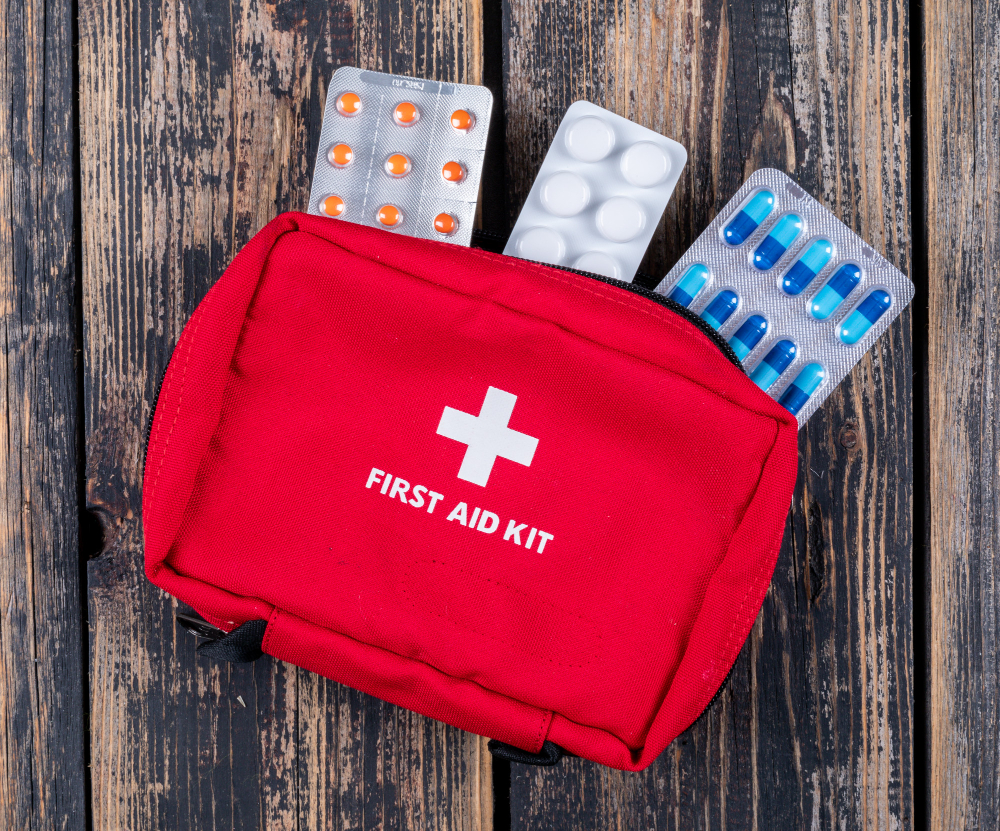
This is the heart of the matter — the actual supplies that make up reliable first-aid essentials. Based on the American Red Cross's official recommended supply checklist, a well-rounded home kit should contain enough materials to manage bleeding, dress wounds, and handle minor emergencies until you can see a doctor.
|
Category |
Items |
Typical Quantity |
|---|---|---|
|
Wound care |
Adhesive bandages (assorted sizes) |
20–25 |
|
Wound care |
Sterile gauze pads (4x4 inch) |
5 |
|
Wound care |
Roller gauze bandage |
1–2 |
|
Wound care |
Adhesive cloth tape |
1 roll |
|
Cleaning |
Antiseptic wipes |
5 |
|
Cleaning |
Antibiotic ointment packets |
5 |
|
Protection |
Non-latex gloves (pairs) |
2 |
|
Protection |
Hydrocortisone ointment |
2 |
|
Tools |
Tweezers, scissors |
1 each |
|
Emergency |
Instant cold compress |
1 |
|
Emergency |
Emergency blanket |
1 |
|
Emergency |
Triangular bandages |
2 |
|
Medication |
Pain relievers (paracetamol) |
As needed |
|
Documentation |
First-aid instruction booklet |
1 |
Cuts, scrapes, and blisters are the most frequent minor injuries in any household, which is why wound-care supplies form the backbone of your kit. You need bandages in multiple sizes because a small nick on a finger and a larger scrape on a knee call for different coverage. Sterile gauze pads and roller bandages handle wounds too large for standard adhesive strips, while adhesive cloth tape keeps dressings secure through movement. Always pair these with antiseptic wipes to clean the wound before covering it, since dressing an unclean cut increases the risk of infection significantly.
Beyond bandages, a few simple tools make first response safer for both the injured person and the caregiver. Non-latex gloves protect against blood-borne exposure and are essential if anyone in the household treats a bleeding wound. Tweezers help remove splinters or debris, while small scissors are needed to cut tape, gauze, or clothing away from an injury. A digital or non-glass oral thermometer also belongs here, useful for checking fevers before deciding whether home care is enough.
Every household has different medical needs, but certain over-the-counter medications are near-universal essentials. Pain relievers like paracetamol, oral rehydration salts for dehydration, and antihistamines for mild allergic reactions cover the majority of everyday situations. If any family member has a known condition — asthma, severe allergies, or diabetes — their prescribed emergency medication (such as an inhaler or auto-injector) should also be stored alongside the general kit, clearly labeled with their name and dosage instructions.
A standard kit built for adults may fall short for households with young children or older family members, who tend to experience different types of injuries and need different care approaches.
Children are more prone to falls, bumps, and accidental ingestion, so their kits benefit from a few targeted additions. Include child-safe adhesive bandages in fun designs (kids are more cooperative when bandages feel less clinical), a saline nasal spray, digital thermometers built for pediatric use, and clear dosage charts for children's paracetamol based on weight, not just age. Keep the number for poison control and your pediatrician visibly written inside the kit lid.
Since falls and cuts are disproportionately common among older adults, as shown in recent injury-prevalence research, kits for elderly care should emphasize fall-related supplies: larger adhesive bandages, elastic compression wraps for sprains, and a blood pressure monitor if anyone has hypertension. Keep a list of current medications and known allergies inside the kit, since this information is often requested by emergency responders and can save valuable time.
A compact secondary kit for travel doesn't need to duplicate your full home kit, but it should cover common scenarios you may face outside the house. A smaller pouch with adhesive bandages, antiseptic wipes, a few pain relief tablets, a mini cold compress, and a basic instruction card is usually enough. The Red Cross notes that vehicle kits should account for the type of vehicle and typical trip length, so a kit for daily commuting looks different from one packed for a long road trip.
Having the right supplies means nothing if you can't find them quickly during a stressful moment. Organization is just as important as the contents themselves.
Use a clear, labeled container rather than a plain shoebox — being able to see contents at a glance saves precious seconds. Separate items into small labeled pouches inside the main box: one for wound care, one for medications, one for tools. Keep an index card taped to the inside lid listing what's inside and where, so anyone in the household, including guests or babysitters, can locate what they need without searching.
Set a recurring reminder every few months to go through your kit. Check expiry dates on ointments and medications, replace anything used up, and make sure gloves haven't perished from heat exposure. This small habit, done consistently, is what actually keeps a first-aid kit reliable when it matters.
A first-aid kit is designed for minor injuries — small cuts, mild burns, bruises, and sprains. It is not a substitute for professional care in cases of heavy bleeding, suspected fractures, chest pain, difficulty breathing, severe burns, or loss of consciousness. In these situations, call emergency services immediately and use first-aid supplies only to stabilize the person while help is on the way.
A home first-aid kit isn't something you buy once and forget in a cupboard — it's a living resource that needs the right supplies, sensible organization, and regular upkeep. As the data shows, falls, cuts, and burns happen far more often at home than most people expect, and having first-aid essentials within reach can mean treating a problem in minutes instead of scrambling for help. Whether you're building a kit for young children, elderly parents, or just your own household, the goal is the same: know what's inside, know where it is, and know when it's time to call for professional care instead. A few hours spent assembling and maintaining your kit today can save far more time, worry, and risk down the road.
Q1: What is the most important item to have in a home first-aid kit?
Sterile adhesive bandages and antiseptic wipes are considered the most frequently used items, since minor cuts and scrapes are the most common household injuries.
Q2: How often should I replace items in my first-aid kit?
Check your kit every three to six months. Replace anything used immediately, and always check expiry dates on ointments, medications, and adhesive products.
Q3: Can I make my own first-aid kit instead of buying one?
Yes. Many households assemble their own kits using a checklist like the one above, which often works out more cost-effective and can be customized to family-specific needs like allergies or chronic conditions.
Q4: Where is the best place to store a first-aid kit at home?
A cool, dry, easily accessible spot such as a kitchen cabinet or hallway shelf works best. Avoid bathrooms, where humidity can degrade bandages and medication faster.
Book your appointment online or call our team directly.